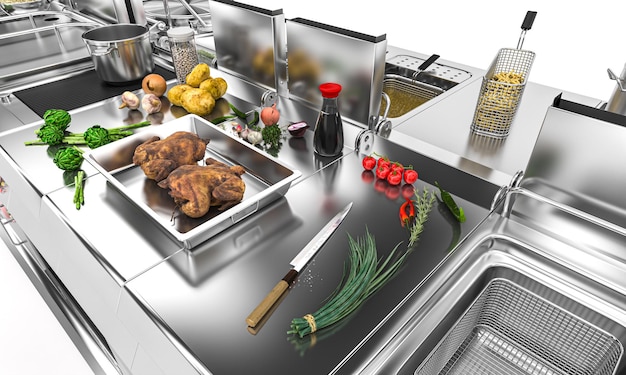
Equipment Your Kitchen Can Depend On, Day After Day
When your restaurant, pub, or hotel kitchen needs equipment that handles peak service without hesitation, whilst staying within sensible budget parameters
Return to HomeWhat Commercial Kitchen Outfitting Delivers
Your commercial kitchen receives equipment specified to match your menu demands and service volumes, installed properly with attention to ventilation requirements and workflow considerations. The approach focuses on equipment that performs reliably during busy periods whilst maintaining operational efficiency throughout your trading hours.
You'll work with engineers who understand the practical realities of commercial kitchens across London and the surrounding counties. They've seen how different equipment performs in various settings, from intimate bistros serving forty covers nightly to hotel kitchens managing breakfast service for two hundred guests. This experience informs equipment recommendations that suit your specific operational context.
The outcome extends beyond simply acquiring new equipment. You gain peace of mind knowing your kitchen can handle the demands placed upon it, allowing you to focus on menu development, service quality, and the countless other considerations that occupy a hospitality operator's attention.
The Equipment Challenge Facing Your Kitchen
Perhaps your current equipment struggles during Friday and Saturday evening service, creating stress for your kitchen brigade and delays that affect the dining experience. Or you're planning a new venue and facing specifications for dozens of pieces of equipment, each with different capacity ratings, utility requirements, and price points that seem difficult to compare meaningfully.
The market presents contradictory information about which manufacturers maintain quality standards, which models suit British installation requirements, and which suppliers provide genuine support after installation. Meanwhile, your budget demands careful allocation whilst avoiding the false economy of inadequate equipment that creates operational limitations down the line.
Space constraints add another layer of complexity. Your kitchen layout requires precise equipment dimensions, proper placement for workflow efficiency, and coordination with ventilation systems and utility connections. These practical considerations affect which equipment actually suits your space, regardless of what specifications look appealing in catalogues.
You need someone who understands both equipment capabilities and the operational realities of commercial kitchens. Someone who can translate your menu requirements and service volumes into equipment specifications that work properly from day one, installed correctly and supported adequately throughout their service life.
Our Approach to Commercial Equipment Specification
Rather than suggesting equipment based on profit margins or manufacturer incentives, our method prioritises what actually suits your operational requirements. This begins with understanding your menu, service patterns, and kitchen constraints before discussing specific equipment models.
We examine your current setup if you're replacing equipment, or we evaluate your planned space if you're fitting out a new kitchen. This assessment considers menu complexity, expected covers per service, prep requirements, and how your brigade works. A restaurant focusing on delicate sauces has different needs than a pub serving substantial portions quickly.
Equipment recommendations draw from installations we've completed across hundreds of London kitchens over the past twenty-eight years. We've seen which models handle daily commercial use reliably, which manufacturers provide adequate parts support, and which specifications actually matter for operational performance versus marketing features that sound impressive but add little practical value.
The installation process accounts for proper ventilation connections, adequate utility capacity, and workflow considerations that affect how efficiently your kitchen operates. Our engineers coordinate with your contractors to ensure everything fits correctly and functions properly before your kitchen opens for service.
The Journey Through Equipment Selection
Working together begins with a conversation about your operation. You describe your menu approach, service style, and any concerns about your current equipment or plans for your new kitchen. This initial discussion happens at your convenience, whether that's at your venue, our London showroom, or via video consultation if distance makes in-person meetings impractical.
We visit your kitchen to assess space, utilities, and workflow patterns. This site evaluation takes perhaps ninety minutes and provides the information needed to suggest appropriate equipment. If you're planning a new venue, we review architectural drawings and discuss layout considerations with your designer or contractor.
Equipment proposals include specific models with transparent pricing, delivery timeframes, and installation requirements. You receive detailed specifications explaining what each piece of equipment does, why it suits your needs, and how it integrates with your kitchen workflow. This information helps you make informed decisions rather than simply trusting our recommendations blindly.
Installation scheduling respects your operational constraints. For existing venues, we coordinate work during closure periods to minimise disruption. For new builds, we align with your overall construction timeline. Throughout the process, you work with the same engineer who conducted your initial assessment, maintaining continuity and accountability.
After installation, we provide guidance on proper equipment use and maintenance requirements. Your staff receives orientation covering daily operation, cleaning procedures, and when to contact us for service attention. This support continues throughout your equipment's service life, not just for the first few weeks.
Investment Parameters for Commercial Outfitting
Commercial kitchen outfitting investments range from £4,200 to £65,000 depending on your kitchen size, menu complexity, and equipment requirements. This range reflects the substantial variation between different types of operations, from compact bistro kitchens to comprehensive hotel catering facilities.
A typical neighbourhood restaurant with fifty covers might invest £12,000 to £18,000 for core cooking equipment, refrigeration, and preparation areas. Larger operations or venues with more complex menus naturally require greater investment to support their operational demands adequately.
Your Investment Includes
- Comprehensive requirements assessment examining menu demands, service volumes, and kitchen layout constraints
- Equipment from established British and European manufacturers selected for reliability in commercial applications
- Professional installation coordinated with your contractors, including ventilation connections and utility requirements
- Staff orientation covering proper operation, cleaning procedures, and maintenance requirements
- Two-year parts and labour warranty covering manufacturer defects and installation workmanship
- Ongoing technical support and access to maintenance services throughout equipment lifespan
Payment arrangements can be structured to suit your financial planning, with deposit and progress payment options available for larger installations. We work with several equipment finance providers if spreading the investment over time suits your cash flow better than outright purchase.
The practical benefit extends beyond the equipment itself. Properly specified and installed equipment that handles your operational demands reliably reduces stress for your kitchen brigade, maintains consistent service quality, and avoids the hidden costs of inadequate equipment that creates bottlenecks during busy periods.
How We Measure Successful Installations
Success in commercial kitchen equipment follows straightforward criteria. The equipment handles your operational demands reliably, your kitchen brigade finds it practical to use, and it maintains performance throughout busy service periods. These outcomes stem from proper specification that matches equipment capabilities to your actual requirements.
We track equipment performance through follow-up assessments conducted three months and twelve months after installation. These evaluations examine whether the equipment operates as expected, whether your staff has questions about optimal use, and whether any adjustments would improve workflow efficiency. This feedback informs our recommendations for future clients with similar operational profiles.
Installation timelines vary based on project scope. A straightforward equipment replacement might complete within two weeks from specification approval to final installation. Comprehensive new kitchen fit-outs typically require six to ten weeks, accounting for equipment manufacture, delivery coordination, and installation scheduling that aligns with your overall construction timeline.
Throughout this period, you work with the engineer who conducted your initial assessment, maintaining clear communication and accountability. If complications arise, they're addressed promptly rather than passed between different departments or technicians who lack familiarity with your specific installation.
Our Commitment to Your Installation
All equipment carries a two-year parts and labour warranty covering manufacturer defects and installation workmanship. This warranty provides straightforward coverage without exclusions that render it meaningless. If equipment fails due to manufacturing defects or installation errors within the warranty period, we repair or replace it at no additional cost.
The consultation process carries no obligation to proceed. We examine your requirements, suggest appropriate equipment, and provide transparent pricing information. If our recommendations don't suit your needs or budget, we part ways amicably. Many clients contact us months after initial consultations when their circumstances allow them to proceed, and we're comfortable with that approach.
Service response for warranty issues typically occurs within two business days for non-emergency situations, or the same day for equipment failures affecting your ability to operate. Our engineers carry common replacement components and diagnostic tools, often resolving issues during initial service visits rather than requiring multiple return trips.
Beyond the warranty period, your equipment remains supported through our maintenance services. Parts remain available from original manufacturers, and our engineers maintain familiarity with equipment we've installed, even years after installation. This ongoing relationship provides continuity that proves valuable when equipment attention becomes necessary.
How to Begin the Equipment Selection Process
Starting the conversation requires simply contacting us with basic information about your kitchen and requirements. A brief message describing your operation type, approximate kitchen size, and current equipment concerns provides sufficient context for scheduling an initial consultation.
The Process Unfolds Through Three Stages
Initial Discussion (30-45 minutes)
We talk through your operational requirements, menu approach, and any specific equipment concerns. This conversation happens via phone, video call, or at your venue, depending on what suits your schedule.
Site Assessment (60-90 minutes)
We visit your kitchen to evaluate space constraints, utility capacity, ventilation arrangements, and workflow patterns. This assessment provides the information needed for accurate equipment recommendations.
Equipment Proposal (delivered within 5-7 business days)
You receive detailed specifications for recommended equipment, transparent pricing breakdown, expected delivery timeframes, and installation scope. This proposal includes sufficient detail for you to make informed decisions about proceeding.
After receiving the proposal, you might have questions about specific equipment choices, alternative options within your budget, or installation timing considerations. We're available to discuss these matters until you feel comfortable with the proposed approach or decide it doesn't suit your needs.
Most clients proceed to installation within four to eight weeks after proposal acceptance, though timing flexibility exists if your operational schedule requires different arrangements. The important consideration is ensuring your kitchen receives equipment that serves you properly, installed at a time that works for your business.
Ready to Discuss Your Commercial Kitchen Requirements?
Contact us to arrange a consultation examining your equipment needs and operational parameters. We'll suggest appropriate solutions based on your specific circumstances, with no pressure to proceed before you're ready.
Get in TouchWe typically respond within one business day to arrange a convenient consultation time.
Explore Our Other Equipment Services
Additional equipment solutions for residential kitchens and ongoing maintenance support.
Residential Kitchen Equipment
Quality cooking equipment for home kitchens throughout England, Wales, and Scotland. Showroom viewing available in London, with delivery and installation services.
Maintenance & Repair Services
Ongoing equipment care through scheduled maintenance visits, priority service response, and parts sourcing from original manufacturers for commercial operations.